 Add to Chrome
 Add to Firefox
 Add to Edge
SpeechEditBench: A Bilingual Multi-Attribute Benchmark for Instruction-Guided Speech Editing
Jun 01, 2026
Instruction-guided speech editing requires a model to modify specified speech attributes while preserving unrelated characteristics. Despite rapid progress in Speech Large Language Models (Speech LLMs), systematic evaluation of this capability remains challenging, as existing benchmarks are fragmented across isolated editing tasks. To bridge this gap, we introduce \textbf{SpeechEditBench}, a bilingual multi-attribute benchmark for instruction-guided speech editing. SpeechEditBench encompasses seven atomic editing tasks, as well as compositional editing tasks that integrate multiple operations within a single instruction. We propose an anchor-based evaluation protocol that separately assesses the edit success of target attributes and the preservation of untargeted attributes, leading to three metrics: target success, preservation success, and joint success. Using this benchmark, we evaluate mainstream Speech LLMs and specialized speech editing systems. The results reveal three key findings: (1) no single model performs well across all editing dimensions; (2) closed-source Speech LLMs generally outperform open-source models; (3) compositional editing remains highly challenging, with even the most advanced models struggling to achieve high joint success. SpeechEditBench provides a rigorous diagnostic framework to identify bottlenecks in Speech LLMs, thereby facilitating the development of next-generation Speech LLMs with more robust and precise instruction-guided editing capabilities. Data and code will be released upon acceptance.

Speech-Omni-Lite: Portable Speech Interfaces for Vision-Language Models
Mar 10, 2026While large-scale omni-models have demonstrated impressive capabilities across various modalities, their strong performance heavily relies on massive multimodal data and incurs substantial computational costs. This work introduces Speech-Omni-Lite, a cost-efficient framework for extending pre-trained Visual-Language (VL) backbones with speech understanding and generation capabilities, while fully preserving the backbones' vision-language performance. Specifically, the VL backbone is equipped with two lightweight, trainable plug-and-play modules, a speech projector and a speech token generator, while keeping the VL backbone fully frozen. To mitigate the scarcity of spoken QA corpora, a low-cost data construction strategy is proposed to generate Question-Text Answer-Text-Speech (QTATS) data from existing ASR speech-text pairs, facilitating effective speech generation training. Experimental results show that, even with only thousands of hours of speech training data, Speech-Omni-Lite achieves excellent spoken QA performance, which is comparable to omni-models trained on millions of hours of speech data. Furthermore, the learned speech modules exhibit strong transferability across VL backbones.
AEQ-Bench: Measuring Empathy of Omni-Modal Large Models
Jan 15, 2026While the automatic evaluation of omni-modal large models (OLMs) is essential, assessing empathy remains a significant challenge due to its inherent affectivity. To investigate this challenge, we introduce AEQ-Bench (Audio Empathy Quotient Benchmark), a novel benchmark to systematically assess two core empathetic capabilities of OLMs: (i) generating empathetic responses by comprehending affective cues from multi-modal inputs (audio + text), and (ii) judging the empathy of audio responses without relying on text transcription. Compared to existing benchmarks, AEQ-Bench incorporates two novel settings that vary in context specificity and speech tone. Comprehensive assessment across linguistic and paralinguistic metrics reveals that (1) OLMs trained with audio output capabilities generally outperformed models with text-only outputs, and (2) while OLMs align with human judgments for coarse-grained quality assessment, they remain unreliable for evaluating fine-grained paralinguistic expressiveness.
DSA-Tokenizer: Disentangled Semantic-Acoustic Tokenization via Flow Matching-based Hierarchical Fusion
Jan 15, 2026Speech tokenizers serve as the cornerstone of discrete Speech Large Language Models (Speech LLMs). Existing tokenizers either prioritize semantic encoding, fuse semantic content with acoustic style inseparably, or achieve incomplete semantic-acoustic disentanglement. To achieve better disentanglement, we propose DSA-Tokenizer, which explicitly disentangles speech into discrete semantic and acoustic tokens via distinct optimization constraints. Specifically, semantic tokens are supervised by ASR to capture linguistic content, while acoustic tokens focus on mel-spectrograms restoration to encode style. To eliminate rigid length constraints between the two sequences, we introduce a hierarchical Flow-Matching decoder that further improve speech generation quality. Furthermore, We employ a joint reconstruction-recombination training strategy to enforce this separation. DSA-Tokenizer enables high fidelity reconstruction and flexible recombination through robust disentanglement, facilitating controllable generation in speech LLMs. Our analysis highlights disentangled tokenization as a pivotal paradigm for future speech modeling. Audio samples are avaialble at https://anonymous.4open.science/w/DSA_Tokenizer_demo/. The code and model will be made publicly available after the paper has been accepted.
CUEMPATHY: A Counseling Speech Dataset for Psychotherapy Research
Sep 04, 2024
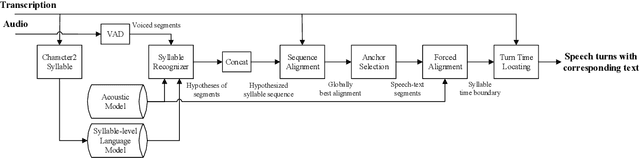
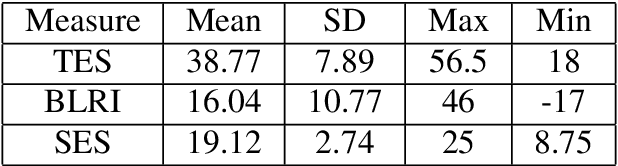
Psychotherapy or counseling is typically conducted through spoken conversation between a therapist and a client. Analyzing the speech characteristics of psychotherapeutic interactions can help understand the factors associated with effective psychotherapy. This paper introduces CUEMPATHY, a large-scale speech dataset collected from actual counseling sessions. The dataset consists of 156 counseling sessions involving 39 therapist-client dyads. The process of speech data collection, subjective ratings (one observer and two client ratings), and transcription are described. An automatic speech and text processing system is developed to locate the time stamps of speaker turns in each session. Examining the relationships among the three subjective ratings suggests that observer and client ratings have no significant correlation, while the client-rated measures are significantly correlated. The intensity similarity between the therapist and the client, measured by the averaged absolute difference of speaker-turn-level intensities, is associated with the psychotherapy outcomes. Recent studies on the acoustic and linguistic characteristics of the CUEMPATHY are introduced.
ToneUnit: A Speech Discretization Approach for Tonal Language Speech Synthesis
Jun 13, 2024
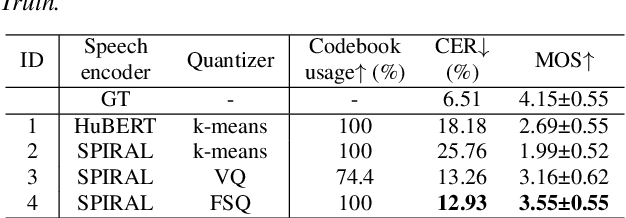
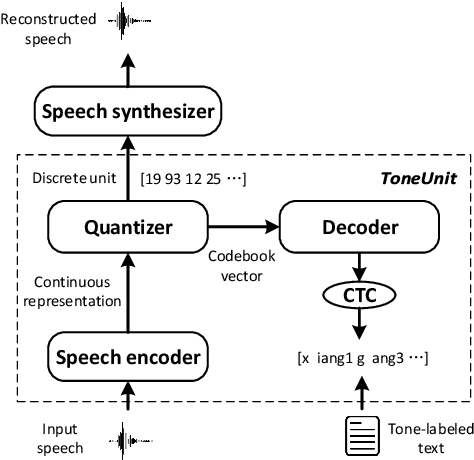
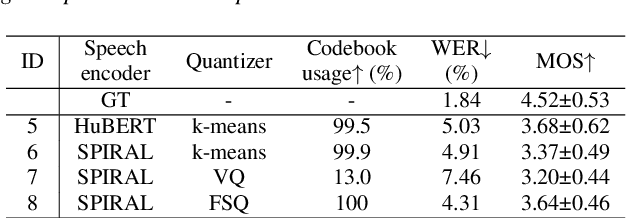
Representing speech as discretized units has numerous benefits in supporting downstream spoken language processing tasks. However, the approach has been less explored in speech synthesis of tonal languages like Mandarin Chinese. Our preliminary experiments on Chinese speech synthesis reveal the issue of "tone shift", where a synthesized speech utterance contains correct base syllables but incorrect tones. To address the issue, we propose the ToneUnit framework, which leverages annotated data with tone labels as CTC supervision to learn tone-aware discrete speech units for Mandarin Chinese speech. Our findings indicate that the discrete units acquired through the TonUnit resolve the "tone shift" issue in synthesized Chinese speech and yield favorable results in English synthesis. Moreover, the experimental results suggest that finite scalar quantization enhances the effectiveness of ToneUnit. Notably, ToneUnit can work effectively even with minimal annotated data.
Modeling Intrapersonal and Interpersonal Influences for Automatic Estimation of Therapist Empathy in Counseling Conversation
Oct 22, 2023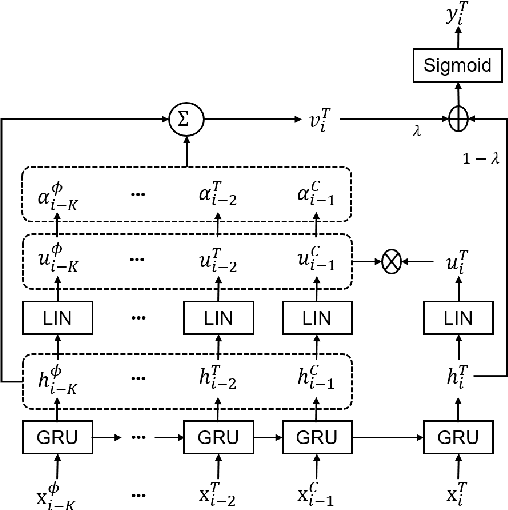
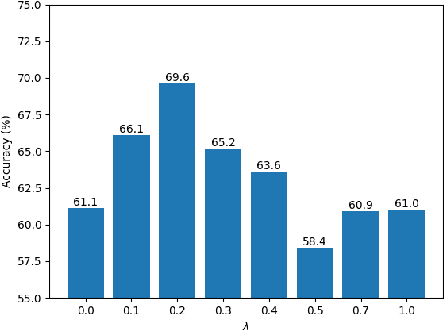
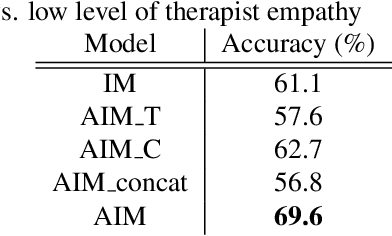
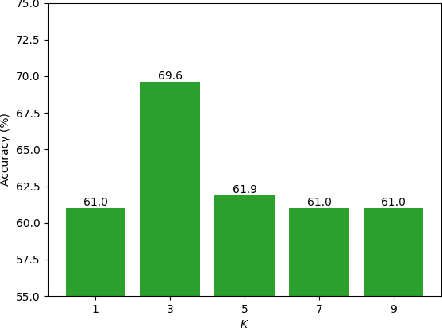
Counseling is usually conducted through spoken conversation between a therapist and a client. The empathy level of therapist is a key indicator of outcomes. Presuming that therapist's empathy expression is shaped by their past behavior and their perception of the client's behavior, we propose a model to estimate the therapist empathy by considering both intrapersonal and interpersonal influences. These dynamic influences are captured by applying an attention mechanism to the therapist turn and the historical turns of both therapist and client. Our findings suggest that the integration of dynamic influences enhances empathy level estimation. The influence-derived embedding should constitute a minor portion in the target turn representation for optimal empathy estimation. The client's turns (interpersonal influence) appear to slightly surpass the therapist's own turns (intrapersonal influence) in empathy estimation effectiveness. It is noted that concentrating exclusively on recent historical turns can significantly impact the estimation of therapist empathy.
A Study on Prosodic Entrainment in Relation to Therapist Empathy in Counseling Conversation
Oct 22, 2023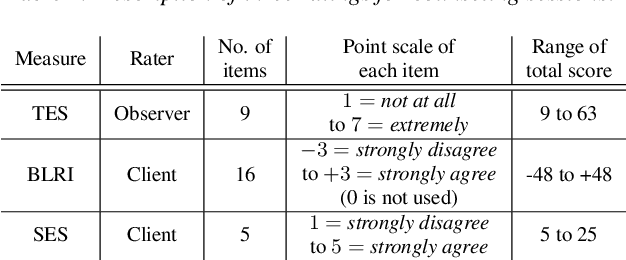
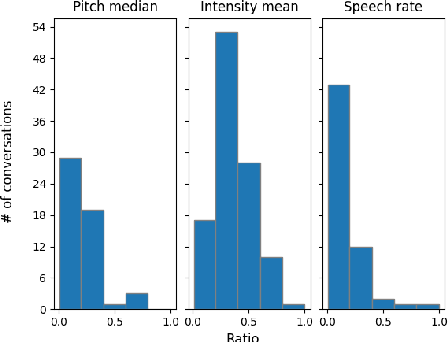
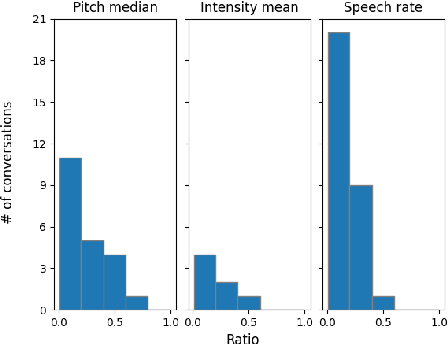
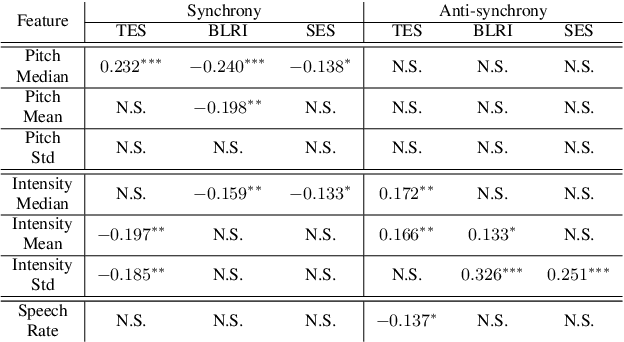
Counseling is carried out as spoken conversation between a therapist and a client. The empathy level expressed by the therapist is considered an important index of the quality of counseling and often assessed by an observer or the client. This research investigates the entrainment of speech prosody in relation to subjectively rated empathy. Experimental results show that the entrainment of intensity is more influential to empathy observation than that of pitch or speech rate in client-therapist interaction. The observer and the client have different perceptions of therapist empathy with the same entrained phenomena in pitch and intensity. The client's intention to make adjustment on pitch variation and intensity of speech is considered an indicator of the client's perception of counseling quality.
Learning Representation of Therapist Empathy in Counseling Conversation Using Siamese Hierarchical Attention Network
May 26, 2023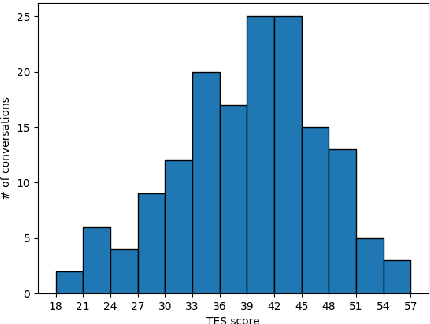
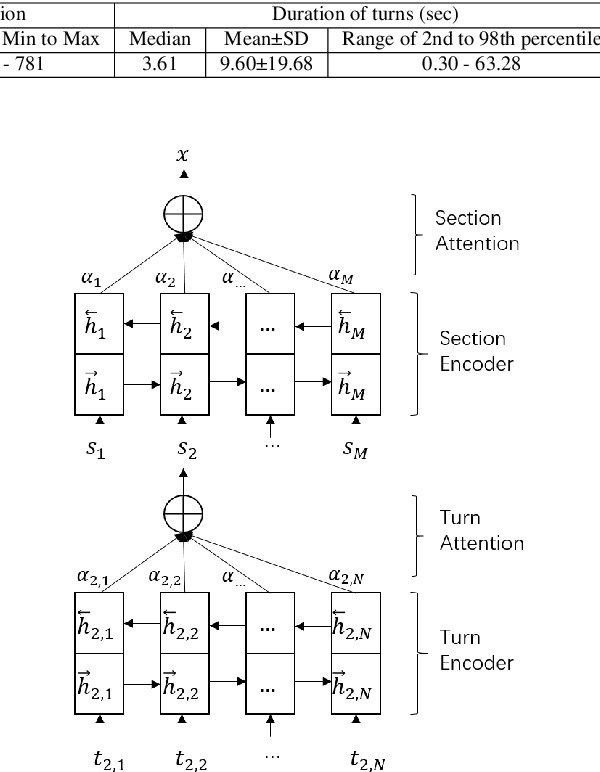
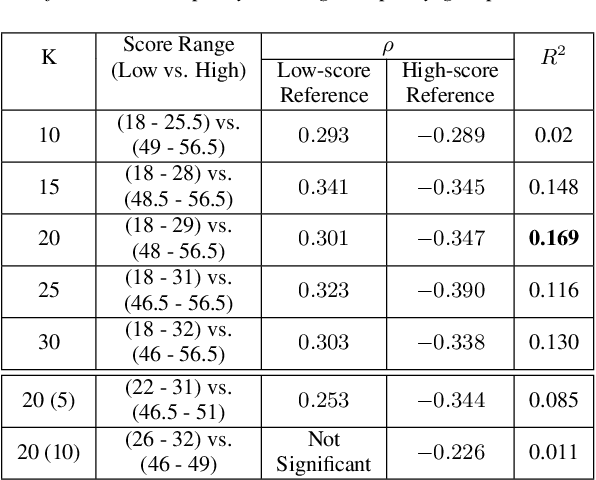
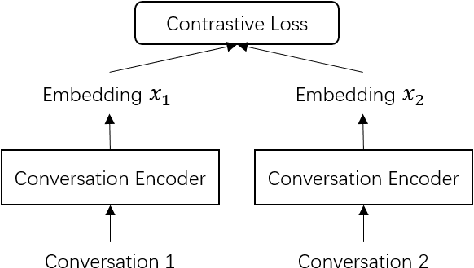
Counseling is an activity of conversational speaking between a therapist and a client. Therapist empathy is an essential indicator of counseling quality and assessed subjectively by considering the entire conversation. This paper proposes to encode long counseling conversation using a hierarchical attention network. Conversations with extreme values of empathy rating are used to train a Siamese network based encoder with contrastive loss. Two-level attention mechanisms are applied to learn the importance weights of individual speaker turns and groups of turns in the conversation. Experimental results show that the use of contrastive loss is effective in encouraging the conversation encoder to learn discriminative embeddings that are related to therapist empathy. The distances between conversation embeddings positively correlate with the differences in the respective empathy scores. The learned conversation embeddings can be used to predict the subjective rating of therapist empathy.
Hierarchical Attention Network for Evaluating Therapist Empathy in Counseling Session
Mar 31, 2022
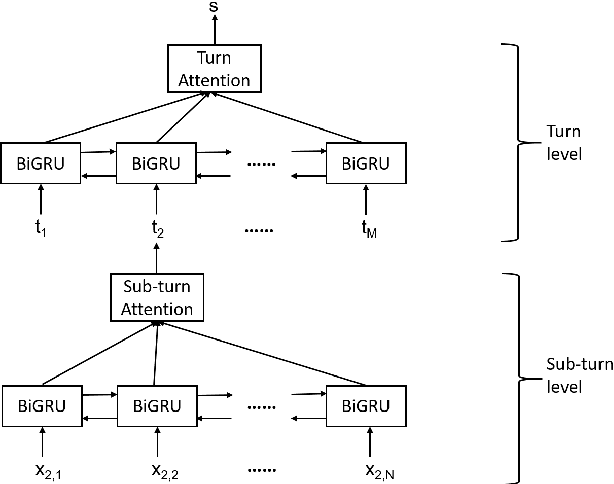
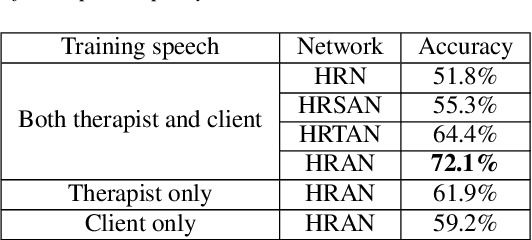
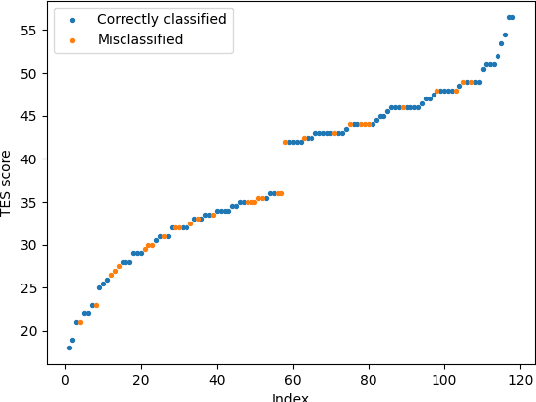
Counseling typically takes the form of spoken conversation between a therapist and a client. The empathy level expressed by the therapist is considered to be an essential quality factor of counseling outcome. This paper proposes a hierarchical recurrent network combined with two-level attention mechanisms to determine the therapist's empathy level solely from the acoustic features of conversational speech in a counseling session. The experimental results show that the proposed model can achieve an accuracy of 72.1% in classifying the therapist's empathy level as being "high" or "low". It is found that the speech from both the therapist and the client are contributing to predicting the empathy level that is subjectively rated by an expert observer. By analyzing speaker turns assigned with high attention weights, it is observed that 2 to 6 consecutive turns should be considered together to provide useful clues for detecting empathy, and the observer tends to take the whole session into consideration when rating the therapist empathy, instead of relying on a few specific speaker turns.